
Pain Relief at Home: Heat, Ice, Massage, TENS and Tools That Help
The right tool can take the edge off pain so you can keep moving. Here is what each one does, when to use it, and what to be careful with.
What is the best pain relief you can use at home?
For everyday muscle and joint pain, the simplest tools work well: heat for stiffness and long-lasting aches, ice for a new injury or swelling, gentle massage, and staying active. US guidelines for low back pain list heat and massage among the first options to try (American College of Physicians). Tools ease symptoms; they work best alongside movement, not instead of it.
Heat or Ice? A Quick Guide
| Heat | Ice | |
|---|---|---|
| Best for | Stiffness, tight muscles, long-lasting aches | New injuries (first 1 to 2 days), swelling, a hot or puffy joint |
| How long | 15 to 20 minutes | 10 to 15 minutes |
| How | Warm (not hot) pack, wrap or shower | Ice pack or frozen peas wrapped in a thin towel |
| Skip it if | The area is swollen, bruised or numb | You have poor circulation or the cold makes stiffness worse |
In general, ice suits new injuries and heat suits longer-lasting pain (Mass General Brigham). If neither helps, it is worth getting checked (Cleveland Clinic).
Safety: never sleep on a heating pad, and always put a cloth between ice and skin. Take extra care if you have diabetes or reduced feeling in the area, since you may not notice a burn.
Massage at Home: Chairs, Massagers and a Tennis Ball
Massage eases muscle tension and can make it easier to move. For low back pain, it is one of the non-surgical options US guidelines support (ACP).
- Tennis ball or foam roller: free or cheap, good for the buttock, upper back and calves.
- Handheld and percussion massagers: useful for larger muscles; keep away from the spine, bones and fresh injuries.
- Massage chairs: convenient for daily back and neck tension, especially if you struggle to reach your own back.
- Avoid massage over a fresh injury, swelling, varicose veins, or a calf that is red, hot and swollen.
TENS Units: What They Do and Who Should Avoid Them
A TENS unit sends a gentle electrical current through pads on the skin. It can give short-term relief for some people with muscle, joint and nerve pain, although results vary from person to person (StatPearls, NIH).
- Start on the lowest setting; it should tingle, not hurt.
- Never place pads on the front of the neck, over the chest, on broken skin or over the eyes.
- Ask your doctor first if you have a pacemaker or heart condition, epilepsy, or are pregnant.
Read the full guide: TENS unit for pain: how it works and how to use it safely.
Tools We Feature
These are the products we currently feature on our area guides. We only list tools from brands we work with directly, and we may earn a commission if you buy through these links, at no extra cost to you.
LifeVibe VAT Chair Prime Relief Massage Chair
For short-term low back pain, US doctors' guidelines (American College of Physicians) list massage and heat among the first things to try. A good massage chair gives you both at home, whenever your back tightens up.
The LifeVibe VAT Chair Prime Relief combines 3D massage rollers with sound-driven vibration, gentle warmth at the lower back and two zero-gravity positions that raise your legs and take pressure off the spine.
Key features: 3D massage rollers, warmth for the lower back, foot rollers, two zero-gravity recline positions (up to 156°)
Affiliate link: we may earn a commission, at no extra cost to you.
LifeVibe VAT Glow Prime Handheld Massager

Much everyday neck pain comes from tight muscles at the back of the neck and across the tops of the shoulders, especially after long hours at a screen. A few minutes of gentle massage can help those muscles let go and make your stretches feel easier.
The LifeVibe VAT Glow Prime is a small handheld massager that uses soft, low-frequency sonic vibration rather than strong pounding, which suits a sensitive area like the neck.
Key features: 3 massage modes, 3 intensity levels, interchangeable massage heads; also for the scalp and face
Affiliate link: we may earn a commission, at no extra cost to you.
SHOCK VITALIZE LITE: Shockwave Therapy at Home
When tennis elbow has not improved after several months of exercises and rest, many clinics offer shockwave therapy: short pulses of pressure aimed at the sore tendon where it attaches to the elbow. Research results are mixed, but some people with long-lasting tennis elbow find it eases pain and helps them get back to normal use.
The SHOCK VITALIZE LITE is a portable radial shockwave device made for home and clinic use, with adjustable intensity so you can start gently. It works best alongside the strengthening exercises above, not instead of them.
Key features: 8 intensity levels, 7 interchangeable treatment heads, portable case, FSA/HSA eligible according to the maker
Affiliate link: we may earn a commission, at no extra cost to you.
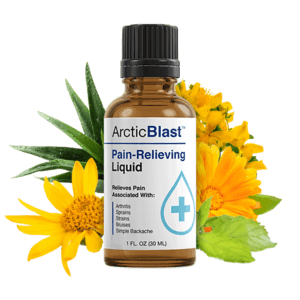
A few drops on the skin give a strong cooling feeling for quick, temporary comfort after gardening, housework or long hours sitting. Its labeled active ingredients, menthol and camphor, are commonly used for the temporary relief of minor muscle and joint aches.
Labeled active ingredients: Menthol and Camphor (plus DMSO and Aloe Vera)
Check Arctic Blast PriceLiving With Pain: What Gadgets Won't Fix
If you have a drawer full of braces, gels and gadgets that didn't quite work, you are not alone. Tools can help, but they work best as part of a bigger plan.
"I keep spending money on things that don't work."
Pain makes people understandably eager for a fix, and marketing knows it.
Your next step: before buying, ask: what will this help me do? If the answer is "move more comfortably" or "sleep better", it may be worth it. If it promises a cure, be skeptical.
"I feel better while I use it, then it comes back."
That is normal. Most tools give temporary relief. That window is the best time to walk or stretch.
Your next step: use heat, massage or cooling before your daily movement, not instead of it.
"I don't know which is right for me."
The right tool depends on where it hurts and why.
Your next step: start with the guide for your area below and use the tool it suggests.
Back and Sciatica
- Lower back pain
- Sciatica
- Herniated (slipped) disc
- Pulled back muscle
- SI joint pain
- Piriformis syndrome
- Tailbone pain
- Pinched nerve
Neck and Shoulder
Arm and Hand
Hip and Knee
Foot and Leg
Frequently Asked Questions
Should I use heat or ice for back pain?
For a new strain in the first day or two, ice can calm the pain. After that, and for long-lasting back pain or stiffness, most people find heat more helpful. Use whichever feels better.
Are massage chairs good for back pain?
They can ease muscle tension and feel good for everyday back and neck aches. They are not a treatment for nerve problems or injuries, and you should stop if pain gets worse.
Does a TENS unit work for back pain?
Some people get short-term relief, but results vary. It is generally safe when used correctly, but check with your doctor first if you have a pacemaker, epilepsy or are pregnant.
Do cooling gels and creams help?
Menthol-based cooling products can give quick, temporary comfort for minor muscle and joint aches. They do not treat the cause, so pair them with movement.
Sources
This guide is general education based on these sources. It is not medical advice.
- Noninvasive Treatments for Acute, Subacute, and Chronic Low Back Pain, American College of Physicians, Annals of Internal Medicine, 2017
- Ice vs. Heat, Mass General Brigham
- Ice vs. Heat: Which Is Better for Your Pain?, Cleveland Clinic
- Transcutaneous Electrical Nerve Stimulation (TENS), StatPearls, National Library of Medicine
- Low Back Pain, OrthoInfo, American Academy of Orthopaedic Surgeons
Written by Silvio Paiva, Psychology Graduate (Universidade Lusíada do Porto) and PhD Candidate (Universidad de Santiago de Compostela) · Last updated November 2026 · About this site