
Living With Chronic Pain: Coping, Mood, Sleep and Support
If pain has been part of your life for months or years, you are far from alone, and there is more you can do than wait for it to go away.
How do you cope with chronic pain?
Chronic pain is pain on most days for three months or more, and about one in five US adults lives with it (NIH). The people who cope best usually combine several things rather than relying on one: regular gentle movement, pacing their activity, protecting their sleep, looking after their mood (therapy such as CBT helps many people), and staying connected with others, alongside their medical care.
What Living With Pain Really Does to You (and What Helps)
Pain is not only a physical feeling. Over time it can touch your energy, your mood, your work and your relationships. Naming these things is the first step to doing something about them.
You feel drained all the time
Constant pain uses up energy, even on days you do very little. Feeling worn out is a normal response, not weakness.
Your next step: plan your day around your energy, not your to-do list: put one important task in your best hour and let the rest wait.
Pain is shrinking your life
Many people slowly stop doing things they love because they are afraid of a flare. Over time, the world gets smaller.
Your next step: try pacing: pick one activity you miss, break it into smaller pieces, and do a little on good and bad days alike, building up slowly. See our exercise guide.
Anxiety and low mood creep in
Pain, anxiety and depression are closely linked, and each can make the others worse (Harvard Health). This is common and treatable (American Psychiatric Association).
Your next step: if your mood has been low for two weeks or more, tell your doctor or a therapist. If you ever feel you might harm yourself, call or text 988 (Suicide and Crisis Lifeline) or your local emergency number.
It has been going on for years
Chronic pain often lasts: in one large NIH study, about two in three people with chronic pain still had it a year later (NIH).
Your next step: shift the goal from "pain-free" to "living well with less pain": choose two or three things you want to be able to do again and work toward those.
Your sleep is broken
Pain disturbs sleep, and poor sleep makes pain feel worse the next day.
Your next step: use the positions and wind-down routine in our sleep guide.
Work is getting harder
Pain can make a full day of work exhausting, and many people hide it from their employer.
Your next step: you may be entitled to workplace changes, such as flexible hours or different equipment, under the Americans with Disabilities Act.
You feel alone with it
Pain is invisible, and people around you may not understand why you cancel plans or leave early.
Your next step: tell one or two people what a bad day looks like for you and what helps. A local or online chronic pain support group can also make a real difference.
Doctors do not seem to listen
Feeling dismissed is common, especially when scans look normal.
Your next step: bring a one-page summary to appointments: where it hurts, what makes it better or worse, what you have tried, and what you want help with. The National Institute on Aging has a useful checklist.
No one taught you how to manage it
Most people get a diagnosis but no plan for daily life. Self-management skills (pacing, flare-up plans, relaxation, sleep habits) can be learned like any other skill.
Your next step: ask about pain programs or physical therapy, and start with a simple written routine like the guide below.
Talking to Someone Who Understands Pain
Psychological therapies such as cognitive behavioral therapy (CBT) and acceptance and commitment therapy (ACT) do not mean the pain is "in your head". They help you change how pain affects your life, your mood and your sleep. Complementary approaches like mindfulness and yoga also help some people (NCCIH).
Support for the Stress, Worry and Poor Sleep That Come With Pain

Pain that lasts for weeks or months rarely stays in the body. It often brings stress, low mood, worry and broken sleep, and those can make the pain feel louder. That’s why the American College of Physicians lists cognitive behavioral therapy (CBT) among the first treatments to try for long-lasting back pain: it helps you change how you respond to pain, even while it’s still there.
Online-Therapy.com is a CBT-based online therapy service you use from home. You're matched with a qualified therapist and get weekly live sessions by video, voice or text, unlimited messaging, practical worksheets, plus yoga and meditation videos. You can change therapist or cancel anytime.
Get 20% off your first month with the code THERAPY20
Affiliate link: we may earn a commission, at no extra cost to you.
A Practical Plan for Everyday Pain
The Pain-Free Body Protocol
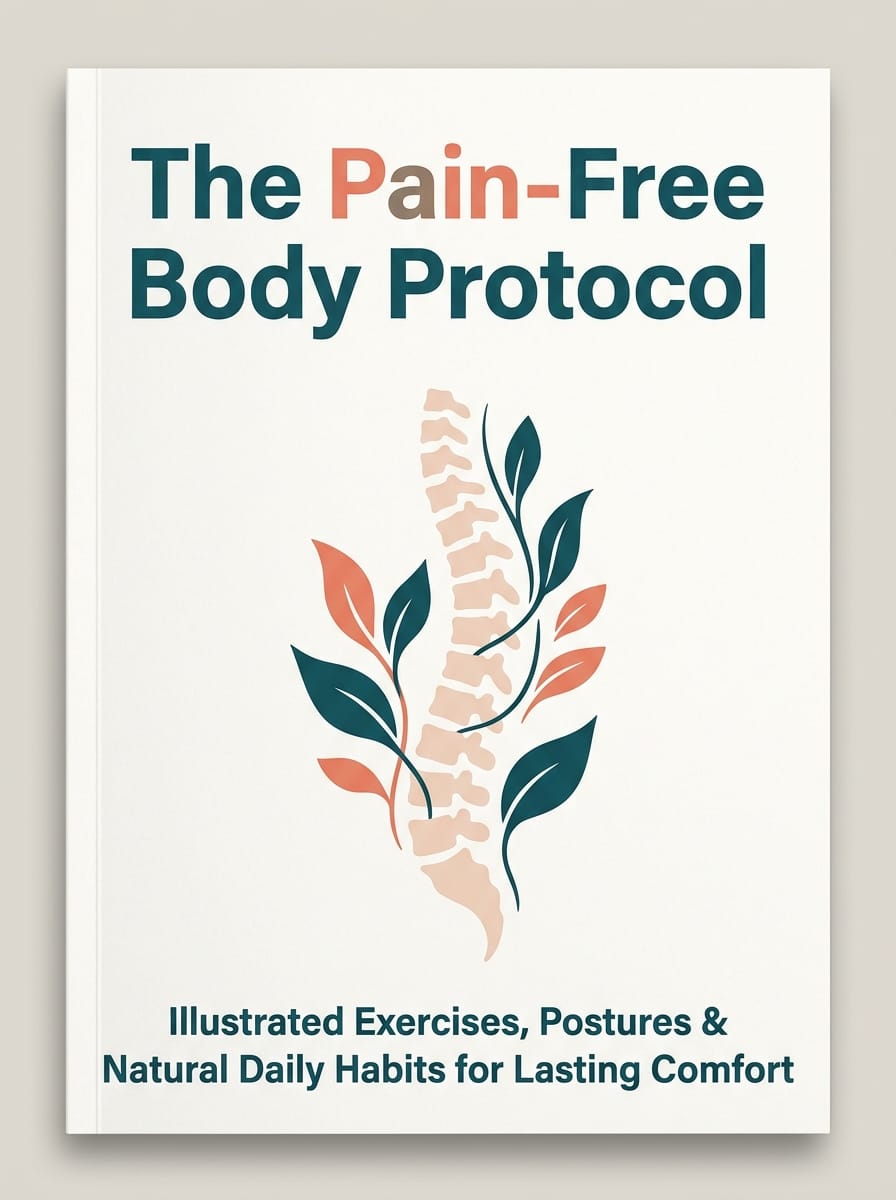
Want the whole routine in one place? Nobody hands you a manual for living with pain. This illustrated guide gives you a simple daily routine, sleep positions and habits you can start this week.
Large print · step-by-step illustrations · 10–15 minutes a day
Get the Pain-Free Body ProtocolE-book · US $17.99 · instant download
Guides by Body Area
Back and Sciatica
- Lower back pain
- Sciatica
- Herniated (slipped) disc
- Pulled back muscle
- SI joint pain
- Piriformis syndrome
- Tailbone pain
- Pinched nerve
Neck and Shoulder
Arm and Hand
Hip and Knee
Foot and Leg
Frequently Asked Questions
What counts as chronic pain?
Pain that you feel on most days or every day for three months or longer. When it limits your daily life or work on most days, doctors call it high-impact chronic pain.
Can therapy help chronic pain?
Yes. Therapies such as CBT and ACT are well studied for chronic pain. They can reduce how much pain disrupts your life and improve mood and sleep, even when the pain itself does not fully go away.
Why does chronic pain make me so tired?
Living with constant pain takes physical and mental effort, and it often disturbs sleep. Both add up to deep tiredness. Pacing, better sleep and gentle activity usually help more than rest alone.
Where can I get help right now if I am struggling?
In the US, call or text 988 to reach the Suicide and Crisis Lifeline any time, day or night (SAMHSA). In an emergency, call your local emergency number.
Sources
This guide is general education based on these sources. It is not medical advice.
- NIH study finds high rates of persistent chronic pain among U.S. adults, National Institutes of Health, 2023
- Chronic Pain and Complementary Health Approaches, National Center for Complementary and Integrative Health
- Chronic Pain and Mental Health Often Interconnected, American Psychiatric Association
- The pain-anxiety-depression connection, Harvard Health Publishing
- How to Prepare for a Doctor's Appointment, National Institute on Aging
- Reasonable Accommodation Under the ADA, U.S. Equal Employment Opportunity Commission
- 988 Frequently Asked Questions, SAMHSA
Written by Silvio Paiva, Psychology Graduate (Universidade Lusíada do Porto) and PhD Candidate (Universidad de Santiago de Compostela) · Last updated November 2026 · About this site