
Neck Pain Relief and Treatment at Home
Most neck pain gets better within a few weeks. Gentle movement, regular breaks and a pillow that keeps your head level usually help it settle.
What helps neck pain fastest?
For everyday neck pain, keep your neck gently moving, take short breaks from screens, and sleep with your head at the same height as your body. Most neck pain only lasts a few weeks. Wearing a neck collar is usually not recommended, because keeping the neck moving helps more.
What is the quickest stiff neck remedy at home?
For a stiff neck, gentle movement plus heat works best for most people: warm the muscles for 15 to 20 minutes, then slowly turn and tilt your head within a comfortable range several times a day. Keeping your neck completely still usually makes stiffness last longer.
- Heat first: a warm shower or heat pack on the back of the neck and shoulders.
- Slow range-of-motion: look left and right, then ear toward shoulder, 5 times each, never into sharp pain.
- Check your screen: raise it to eye level so you're not looking down for hours.
- Change position every 30 minutes if you work at a desk or on your phone.
The Pain-Free Body Protocol
Want the whole routine in one place? What helps a stiff neck most is a few minutes of the right movement every day. This illustrated guide shows you exactly what to do, plus posture tips, comfortable sleeping positions and simple daily habits.
Large print · step-by-step illustrations · 10–15 minutes a day
Get the Pain-Free Body ProtocolE-book · US $17.99 · instant download
What causes neck pain?
Neck pain is most often caused by neck strain or spasms, posture and stress, and wear and tear.
- Neck strain or spasms: a pulled or tight muscle from sleeping awkwardly, a sudden movement or long hours at a desk.
- Posture and stress: holding your head forward at a screen, and stress, both keep the neck and shoulder muscles working.
- Neck pain and headache: tight neck muscles can bring on tension-type headaches at the back of the head.
- Wear and tear: age-related changes in the neck (cervical spondylosis) are common and often cause stiffness.
What are the best stretches for neck pain?
Gentle, regular stretching helps most. Good options include chin tucks, side bends, head turns, and shoulder rolls. Go slowly and stop any move that makes the pain sharper.
Do these slowly, a few times a day, especially if you sit for long periods:
- Chin tucks: sitting tall, gently draw your chin straight back, hold 5 seconds, relax. Repeat 8–10 times.
- Side bends: slowly tilt your ear toward your shoulder until you feel a gentle stretch, hold 10 seconds, then switch sides.
- Head turns: slowly look over one shoulder, then the other, 5 times each way.
- Shoulder rolls: roll your shoulders backwards in slow circles 10 times to release tight upper-back muscles.
Move slowly, within a comfortable range, and stop if the pain gets sharper.
What everyday habits help neck pain?
- Keep your screen at eye level and take a short movement break every 30–45 minutes.
- Sleep with one supportive pillow that keeps your head level with your body, on a firm mattress.
- Avoid holding your phone between your ear and shoulder.
- Don't do anything that could be dangerous if you can't turn your head, such as driving.
We may earn a commission if you buy through the product links below, at no extra cost to you.
LifeVibe VAT Glow Prime Handheld Massager

Much everyday neck pain comes from tight muscles at the back of the neck and across the tops of the shoulders, especially after long hours at a screen. A few minutes of gentle massage can help those muscles let go and make your stretches feel easier.
The LifeVibe VAT Glow Prime is a small handheld massager that uses soft, low-frequency sonic vibration rather than strong pounding, which suits a sensitive area like the neck.
Key features: 3 massage modes, 3 intensity levels, interchangeable massage heads; also for the scalp and face
Affiliate link: we may earn a commission, at no extra cost to you.
Arctic Blast Cooling Liquid
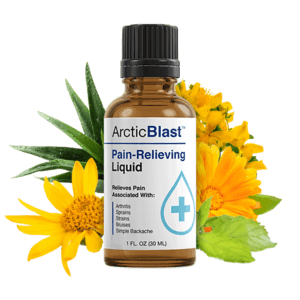
A few drops on the skin give a strong cooling feeling for quick, temporary comfort when your neck feels tight after screen time or sleeping awkwardly. Its labeled active ingredients, menthol and camphor, are commonly used for the temporary relief of minor muscle and joint aches.
Labeled active ingredients: Menthol and Camphor (plus DMSO and Aloe Vera)
Check Arctic Blast PriceHow do you use cooling drops safely?
- Test on a small patch of skin first.
- Use only on unbroken skin and keep away from eyes and mouth.
- Don't combine with a heating pad or a tight bandage over the area.
- Pregnant, on blood thinners or have sensitive skin? Ask your pharmacist first.
- Topical products ease surface aches; they don't treat the cause. Stop if your skin turns red, itchy or sore.
Living With Neck Pain: What Nobody Tells You
If you've ever turned your whole body to check your blind spot, or woken up with a headache that started in your neck, you know neck pain gets into everything. Here is what most guides leave out.
Why does neck pain leave you so drained and irritable?
Tension headaches, tight shoulders and broken sleep often come along with it. Pain that lasts keeps your nervous system on alert, sleep suffers, and worry can make the pain feel louder. The American Psychiatric Association describes this two-way link between long-lasting pain, sleep, stress and mood.
Your next step: two short breaks a day for slow breathing (in for 4, out for 6), and plan your day in small chunks with rests before the pain forces you to stop. If worry or low mood are taking over, see the support section below.
How do you sleep with neck pain?
On your back or side, with a pillow that keeps your head level with your spine: not propped up, not dropping down. Sleeping on your stomach twists the neck and usually makes it worse (Cleveland Clinic).
Your next step: if your pillow is flat or lumpy, try a firmer or contoured one. See our Sleep guide for options.
Can you keep working with neck pain?
Yes, and screens are usually the biggest factor. Looking down at a laptop or phone for hours loads the neck muscles constantly.
Your next step: raise your screen to eye level, use a headset for calls, and set a 30-minute reminder to roll your shoulders and move your neck. Ask for equipment adjustments under the Americans with Disabilities Act if you need them.
What if your doctor says it's nothing?
Many people with neck pain feel brushed off, especially when scans look "normal". A short visit makes it hard to show what you live with every day, so coming prepared helps. The National Institute on Aging recommends writing your concerns down, most important first.
Your next step: keep a one-week diary (which movements hurt, headaches, any arm pain or tingling, and how it affects sleep and work). Bring it and ask: "What do you think is causing this?", "What should I try if it isn't better in six weeks?" and "Would a physical therapist help?" A second opinion is always okay.
How do you explain neck pain to people who don't get it?
Neck pain is mostly invisible, so people may not see why you can't look over your shoulder or stay through a long dinner. Feeling misunderstood is one of the hardest parts of living with pain.
Your next step: use one simple sentence, such as "My neck muscles are strained, so I need to move it gently and take breaks from screens", and then ask for one specific kind of help.
Why has nobody taught you how to manage neck pain?
Most people are never shown how to manage pain themselves: how to set up your desk, which stretches help and how to stop a flare-up from building. Yet these everyday skills are what help most over time, and talking therapies such as CBT are among the best-studied ways to cope with long-lasting pain (Harvard Health).
Your next step: start with the moves and habits on this page, and use The Pain-Free Body Protocol above if you want a step-by-step plan.
Support for the Stress, Worry and Poor Sleep That Come With Pain

Pain that lasts for weeks or months rarely stays in the body. It often brings stress, low mood, worry and broken sleep, and those can make the pain feel louder. That’s why the American College of Physicians lists cognitive behavioral therapy (CBT) among the first treatments to try for long-lasting back pain: it helps you change how you respond to pain, even while it’s still there.
Online-Therapy.com is a CBT-based online therapy service you use from home. You're matched with a qualified therapist and get weekly live sessions by video, voice or text, unlimited messaging, practical worksheets, plus yoga and meditation videos. You can change therapist or cancel anytime.
Get 20% off your first month with the code THERAPY20
Affiliate link: we may earn a commission, at no extra cost to you.
Common Questions About Neck Pain
How long does neck pain last?
Most neck pain gets better within a few weeks. If it hasn't eased after a few weeks of home care, or painkillers aren't helping, see a doctor.
What is the best sleeping position for neck pain?
Sleep on your back or side with one pillow that keeps your head level with your body. Too many pillows push your head forward and can make neck pain worse.
When should I see a doctor about neck pain?
Get urgent help if neck pain starts suddenly and is severe, comes with weakness or heaviness in your arms or legs, pins and needles in an arm, a fever, or follows an injury or accident. Call your local emergency number if you have new problems walking. See a doctor if it doesn't go away after a few weeks.
Sources: Mayo Clinic: Neck pain · Mayo Clinic: Cervical spondylosis
What is trapezius pain?
The trapezius is the large muscle across the top of your shoulders and the back of your neck. Trapezius muscle pain often comes from stress, carrying bags on one side, or long hours at a screen. Heat, gentle shoulder rolls and breaks from sitting usually help.
What is cervical radiculopathy?
It is a pinched nerve in the neck, often from a disc or bone spur pressing on a nerve root. It causes pain, numbness or weakness that travels down the arm. Most cases improve with time and physical therapy; see a doctor if you have arm weakness (AAOS).
What should you do after a whiplash injury?
Get checked by a doctor after any car accident or fall, especially if the pain is severe or spreads to your arms. For a mild neck strain, gentle movement and heat usually help it recover over a few weeks (AAOS).
What is cervical spondylosis?
It is age-related wear of the discs and joints in the neck. It is very common after 50 and often causes stiffness and aching; exercise and good posture help most people.
Free 7-day guide
The 7-Day Gentle Back Reset
One simple 15-minute step a day to ease lower back pain at home: gentle moves with pictures, a walking plan, calming breathing and a printable tracker.
Get the Free GuideRelated guides
See also: Pinched nerve
Sources
- Neck Pain. OrthoInfo, American Academy of Orthopaedic Surgeons.
- Neck Sprains and Strains. OrthoInfo, American Academy of Orthopaedic Surgeons.
- Cervical Spondylosis (Arthritis of the Neck). OrthoInfo, American Academy of Orthopaedic Surgeons.
- Best Sleeping Positions for Pain. Cleveland Clinic.
- Chronic Pain and Mental Health Often Interconnected. American Psychiatric Association.
- The pain-anxiety-depression connection. Harvard Health Publishing.
- How to Prepare for a Doctor's Appointment. National Institute on Aging.
- Reasonable Accommodation Under the ADA. U.S. Equal Employment Opportunity Commission.
Written by Silvio Paiva, Psychology Graduate (Universidade Lusíada do Porto) and PhD Candidate (Universidad de Santiago de Compostela) · Last updated November 2026 · About this site