
Lower Back Pain Relief and Treatment at Home
Most everyday lower back pain gets better within a few weeks. This simple plan helps you stay comfortable and keep moving while it does.
By Silvio Paiva, Psychology Graduate (Universidade Lusíada do Porto) and PhD Candidate (Universidad de Santiago de Compostela) · Based on American College of Physicians and Mayo Clinic guidance · Last reviewed: November 2026. General information only, not a substitute for advice from your doctor.
How do you get immediate relief for severe lower back pain?
When severe lower back pain hits, the fastest relief usually comes from finding a position that unloads your spine, adding heat, and moving gently instead of staying in bed. Heat wraps are one of the first treatments US doctors' guidelines recommend for this kind of pain (American College of Physicians).
- Lie on your back with your lower legs resting on a chair or a stack of pillows, so your hips and knees are bent at about 90 degrees.
- Heat for 15 to 20 minutes: a heat wrap or warm pack on the lower back, a few times a day.
- Short walks: even five minutes around the house every hour helps muscles relax.
- Avoid twisting and lifting for a few days, and get up from bed by rolling onto your side first.
Most people with a flare-up of lower back pain feel clearly better within a few weeks. If the pain is extreme, keeps getting worse, or comes with numbness or weakness, see the signs below.
What helps lower back pain fastest?
For everyday lower back pain, keep moving gently rather than resting in bed, use a heat wrap or a warm bath to relax tight muscles, and add a few easy stretches each day. Most lower back pain gets better within a few weeks. See a doctor if it follows a fall or injury, spreads below your knee, or isn’t improving.
The Pain-Free Body Protocol
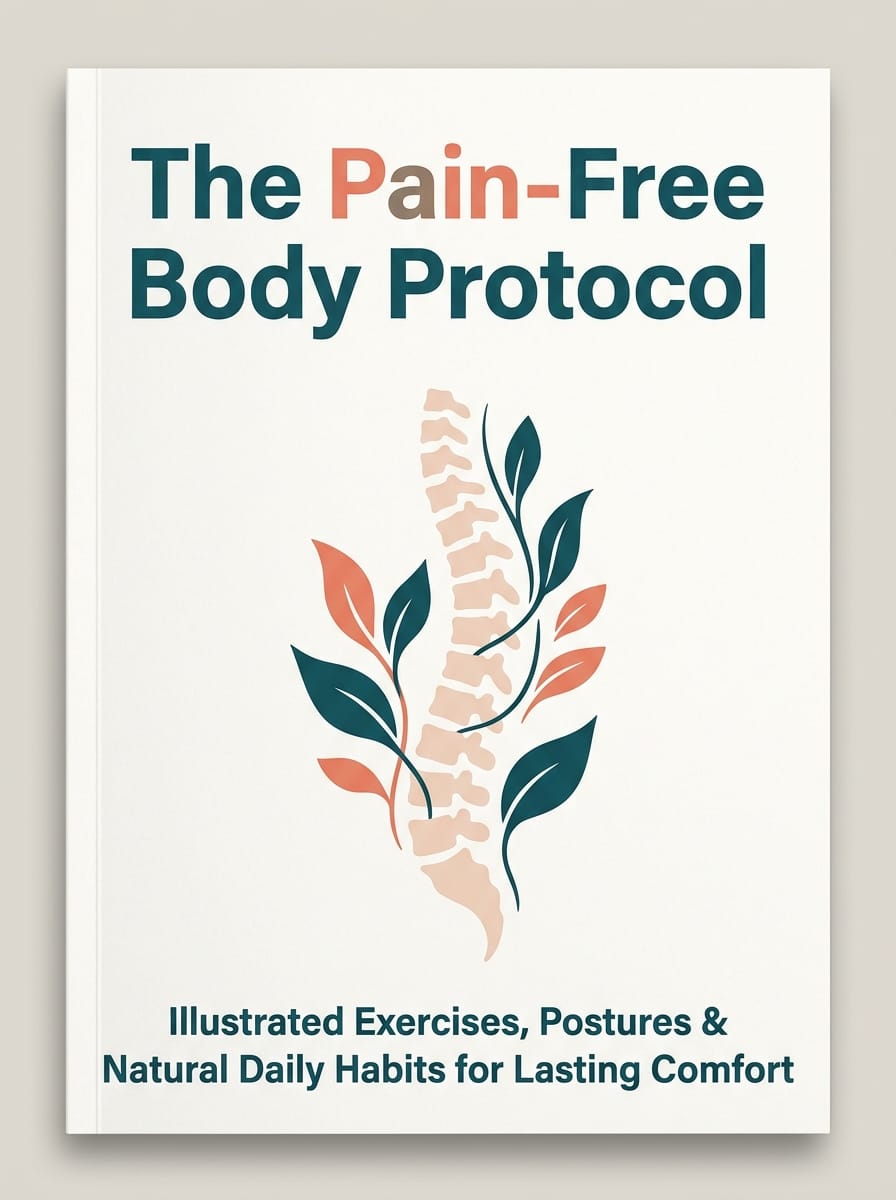
Want the whole routine in one place? What helps your back most is a few minutes of the right movement every day. This illustrated guide shows you exactly what to do, plus comfortable sleeping positions and simple daily habits.
Large print · step-by-step illustrations · 10–15 minutes a day
Get the Pain-Free Body ProtocolE-book · US $17.99 · instant download
What causes lower back pain?
Most lower back pain is called non-specific: there is no single damaged part, and scans usually don’t show a cause. Muscles, joints and ligaments get irritated or strained, often after lifting, a long day of sitting or an awkward movement.
Pain is also shaped by your nervous system. Stress, worry and poor sleep can turn the “volume” of pain up, which is why calm, gentle movement and good sleep help so much.
The good news: in most cases back pain is not a sign of serious damage, and it usually settles within a few weeks.
What are the best exercises and stretches for lower back pain?
Gentle, regular movement helps most. Good options include short walks, knee-to-chest, pelvic tilts, and cat-cow. Go slowly and stop any move that makes the pain sharper.
Long bed rest usually makes back pain last longer. A few minutes of gentle movement, several times a day, helps more:
- Short walks: 5–10 minutes, a few times a day.
- Knee-to-chest: lying on your back, gently hug one knee toward your chest for 10 seconds, then switch.
- Pelvic tilts: knees bent, gently press your lower back into the floor, hold 5 seconds, relax.
- Cat-cow: on hands and knees, slowly round and then gently arch your back, 5–8 times.
Move slowly, within a comfortable range, and stop if the pain gets sharper.
Should you use heat or cold for lower back pain?
Many people find that heat relaxes stiff back muscles: a warm bath, or a hot water bottle or heat wrap covered with a towel. A cold pack wrapped in a cloth can feel better in the first day or two after a strain.
- Use heat or cold for about 15–20 minutes at a time.
- Always put a cloth between the pack and your skin.
- Never fall asleep on a heating pad.
- Choose whichever feels more comfortable for you; there is no wrong answer.
What everyday habits help lower back pain?
- Keep up normal activities as much as you can. Staying active is one of the best ways to recover.
- Break up sitting: stand up and move for a minute every 30–45 minutes.
- Lift smart: bend your knees, keep the load close to your body and avoid twisting while you lift.
- Sleep comfortably: on your side with a pillow between your knees, or on your back with a pillow under your knees.
- Look after stress and sleep: a calmer nervous system often means less pain.
We may earn a commission if you buy through the product links below, at no extra cost to you.
LifeVibe VAT Chair Prime Relief Massage Chair
For short-term low back pain, US doctors' guidelines (American College of Physicians) list massage and heat among the first things to try. A good massage chair gives you both at home, whenever your back tightens up.
The LifeVibe VAT Chair Prime Relief combines 3D massage rollers with sound-driven vibration, gentle warmth at the lower back and two zero-gravity positions that raise your legs and take pressure off the spine.
Key features: 3D massage rollers, warmth for the lower back, foot rollers, two zero-gravity recline positions (up to 156°)
Affiliate link: we may earn a commission, at no extra cost to you.
Arctic Blast Cooling Liquid
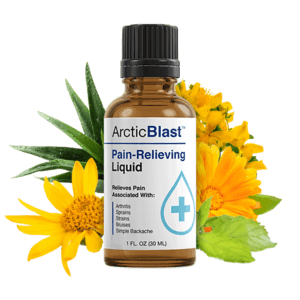
A few drops on the skin give a strong cooling feeling for quick, temporary comfort after gardening, housework or long hours sitting. Its labeled active ingredients, menthol and camphor, are commonly used for the temporary relief of minor muscle and joint aches.
Labeled active ingredients: Menthol and Camphor (plus DMSO and Aloe Vera)
Check Arctic Blast PriceHow do you use cooling drops safely?
- Test on a small patch of skin first.
- Use only on unbroken skin and keep away from eyes and mouth.
- Don't combine with a heating pad or a tight bandage over the area.
- Pregnant, on blood thinners or have sensitive skin? Ask your pharmacist first.
- Stop if your skin turns red, itchy or sore.
Living With Lower Back Pain: What Nobody Tells You
If you've ever stood up from a chair in stages, or planned your day around whether you can manage the stairs, you know lower back pain isn't just a sore back. It reaches into sleep, work, mood and relationships. Here is what most guides skip, and what you can do about each part.
Why does lower back pain leave you so drained and irritable?
Every time you bend, lift or sit, your back reminds you it's there. Pain that lasts keeps your nervous system on alert, sleep suffers, and worry can make the pain feel louder. The American Psychiatric Association describes this two-way link between long-lasting pain, sleep, stress and mood.
Your next step: two short breaks a day for slow breathing (in for 4, out for 6), and plan your day in small chunks with rests before the pain forces you to stop. If worry or low mood are taking over, see the support section below.
How do you sleep with lower back pain?
Sleep on your side with a pillow between your knees, or on your back with a pillow under your knees. Both keep your lower spine in a neutral line. A medium-firm mattress usually suits backs better than a very soft one (Cleveland Clinic).
Your next step: try 15 minutes of heat before bed and roll onto your side to get up in the morning.
Can you keep working with lower back pain?
Most people can, and staying active usually helps recovery. The trick is to stop staying in one position for too long.
Your next step: change position every 30 minutes, keep your lower back supported when you sit, lift with your knees close to the load, and ask your employer for adjustments if you need them under the Americans with Disabilities Act.
What if your doctor says it's nothing?
Many people with lower back pain feel brushed off, especially when scans look "normal". A short visit makes it hard to show what you live with every day, so coming prepared helps. The National Institute on Aging recommends writing your concerns down, most important first.
Your next step: keep a one-week diary (where it hurts, how bad from 0 to 10, what makes it worse, and what you can't do). Bring it and ask: "What do you think is causing this?", "What should I try if it isn't better in six weeks?" and "Would a physical therapist help?" A second opinion is always okay.
How do you explain lower back pain to people who don't get it?
Lower back pain is mostly invisible, so people may not see why you skip a long car ride or can't carry the shopping. Feeling misunderstood is one of the hardest parts of living with pain.
Your next step: use one simple sentence, such as "My back is irritated and needs short breaks, not rest in bed", and then ask for one specific kind of help.
Why has nobody taught you how to manage lower back pain?
Most people are never shown how to manage pain themselves: how to pace activity, what to do in a flare-up and how to move without fear. Yet these everyday skills are what help most over time, and talking therapies such as CBT are among the best-studied ways to cope with long-lasting pain (Harvard Health).
Your next step: start with the moves and habits on this page, and use The Pain-Free Body Protocol above if you want a step-by-step plan.
Support for the Stress, Worry and Poor Sleep That Come With Pain

Pain that lasts for weeks or months rarely stays in the body. It often brings stress, low mood, worry and broken sleep, and those can make the pain feel louder. That’s why the American College of Physicians lists cognitive behavioral therapy (CBT) among the first treatments to try for long-lasting back pain: it helps you change how you respond to pain, even while it’s still there.
Online-Therapy.com is a CBT-based online therapy service you use from home. You're matched with a qualified therapist and get weekly live sessions by video, voice or text, unlimited messaging, practical worksheets, plus yoga and meditation videos. You can change therapist or cancel anytime.
Get 20% off your first month with the code THERAPY20
Affiliate link: we may earn a commission, at no extra cost to you.
Common Questions About Back Pain
How long does lower back pain usually last?
Most everyday lower back pain improves within a few weeks. Staying gently active usually helps it settle faster than bed rest.
Is it better to rest or move with back pain?
For everyday back pain, gentle movement such as short walks and simple stretches is usually better than long bed rest. Stop any movement that makes the pain sharper.
When should I see a doctor about back pain?
See a doctor urgently if you have numbness around your genitals or buttocks, trouble controlling your bladder or bowels, a fever, or pain after an accident, and see one if the pain isn't improving after a few weeks.
Sources: American College of Physicians: Low back pain guideline · Mayo Clinic: Back pain
More reading: Cleveland Clinic: Back pain
What is degenerative disc disease?
It is the normal wear of the discs between the vertebrae as we age. Many people have it on scans with no pain at all. When it does cause lower back pain, the same steps help: staying active, strengthening exercises and heat. Read more on our herniated disc guide.
Which back muscles cause lower back pain?
Most everyday lower back pain comes from strained or tight back muscles and ligaments, such as the muscles running alongside the spine. That is why gentle movement and heat often help more than rest.
When is lower back pain severe enough to see a doctor?
See a doctor if the pain hasn't improved after a few weeks, keeps getting worse, wakes you at night, or comes with fever, weight loss, numbness or leg weakness. Call your local emergency number for numbness around your genitals or loss of bladder or bowel control.
Sources
- Low Back Pain. OrthoInfo, American Academy of Orthopaedic Surgeons.
- Noninvasive Treatments for Acute, Subacute, and Chronic Low Back Pain. American College of Physicians, Annals of Internal Medicine, 2017.
- Low Back Pain: ACP Guideline Summary. American Family Physician.
- Best Sleeping Positions for Pain. Cleveland Clinic.
- Chronic Pain and Mental Health Often Interconnected. American Psychiatric Association.
- The pain-anxiety-depression connection. Harvard Health Publishing.
- How to Prepare for a Doctor's Appointment. National Institute on Aging.
- Reasonable Accommodation Under the ADA. U.S. Equal Employment Opportunity Commission.
Free 7-day guide
The 7-Day Gentle Back Reset
One simple 15-minute step a day to ease lower back pain at home: gentle moves with pictures, a walking plan, calming breathing and a printable tracker.
Get the Free GuideSee also: Pinched nerve
Sources
- Low Back Pain. OrthoInfo, American Academy of Orthopaedic Surgeons.
- Noninvasive Treatments for Acute, Subacute, and Chronic Low Back Pain. American College of Physicians, Annals of Internal Medicine, 2017.
- Low Back Pain: ACP Guideline Summary. American Family Physician.
- Best Sleeping Positions for Pain. Cleveland Clinic.
- Chronic Pain and Mental Health Often Interconnected. American Psychiatric Association.
- The pain-anxiety-depression connection. Harvard Health Publishing.
- How to Prepare for a Doctor's Appointment. National Institute on Aging.
- Reasonable Accommodation Under the ADA. U.S. Equal Employment Opportunity Commission.
Free 7-day guide
The 7-Day Gentle Back Reset
One simple 15-minute step a day to ease lower back pain at home: gentle moves with pictures, a walking plan, calming breathing and a printable tracker.
Get the Free GuideWritten by Silvio Paiva, Psychology Graduate (Universidade Lusíada do Porto) and PhD Candidate (Universidad de Santiago de Compostela) · Last updated November 2026 · About this site