
New 2nd edition · Large print
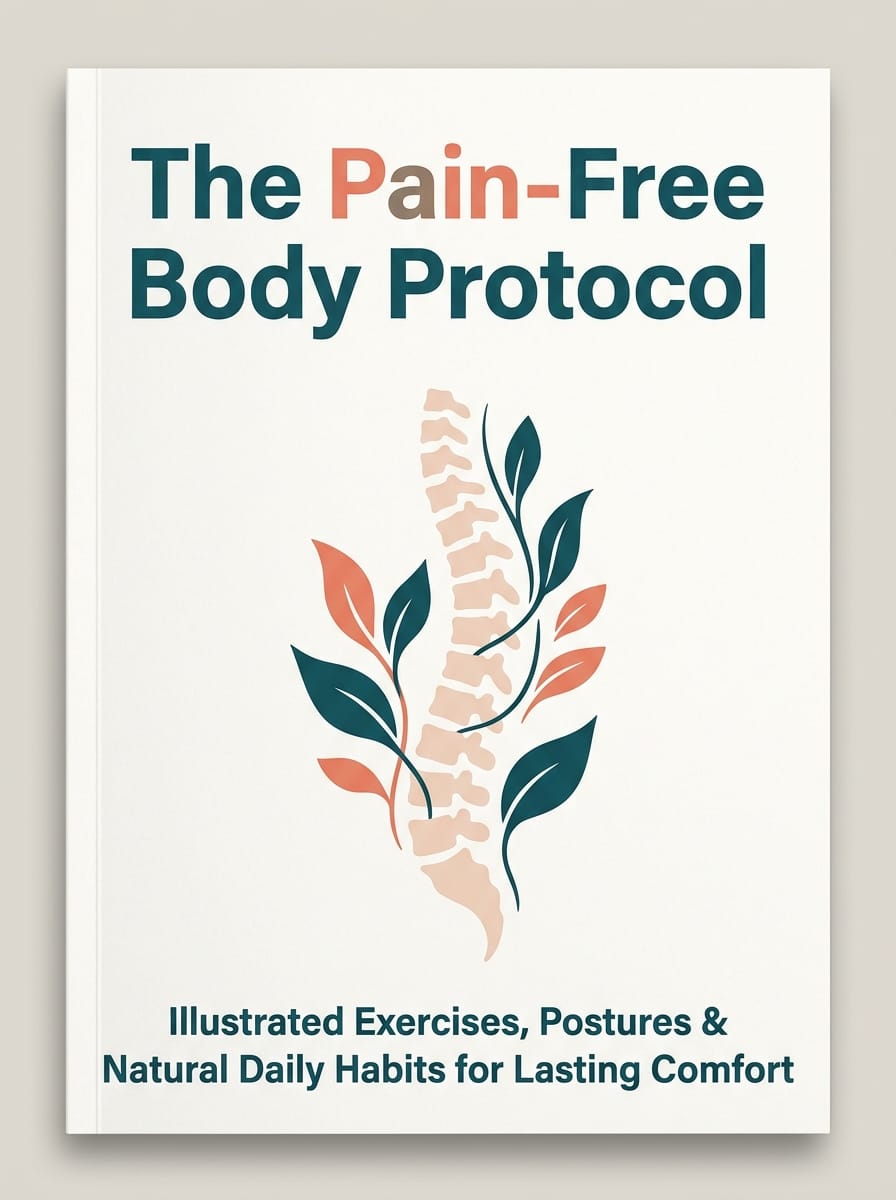
The Pain-Free Body Protocol
Ease everyday back, neck, shoulder, hip and knee pain at home with simple steps that research and health guidelines support, explained in plain words and large, easy-to-read print.
$17.99 · instant PDF download
Get the Guide for $17.99Pain makes you move less. Moving less makes pain worse.
Stiffness after sitting, a sore back in the morning, knees that complain on the stairs: it is natural to protect a painful area. But too much rest makes joints stiffer and the pain alarm louder.
This guide shows you how to break that cycle gently, without pushing through pain, using the methods that guidelines from the American College of Physicians recommend: staying active, simple strength, walking, understanding pain, calming the nervous system and protecting your sleep.
What you'll get
- 7 short chapters written in plain language
- Clear pictures for every exercise
- A 4-week plan, about 15 to 20 minutes a day
- A flare-up plan for bad days
- A printable tracker to see your progress
- Large print that is easy to read on a phone, tablet or paper
- A clear "when to see a doctor" checklist, so you know what is safe
Inside the guide
Understand Your Pain
Why pain is an alarm, not a damage meter, and the Gentle Motion Loop that breaks the pain-stiffness cycle.
The Spine Matrix for Back Relief
Five gentle moves, the Supported Bird-Dog and the Seated Forward Lean, plus what to do if pain travels down the leg.
The Freedom Walk for Knees and Hips
Joint-friendly strength moves and a 4-week walking plan that builds up safely.
The Open Frame for Neck and Shoulders
A doorway chest opener, upper-back strength moves and desk habits.
Calm the Alarm
Slow breathing, a body scan, pacing and simple coping skills from pain psychology.
Sleep, Posture Truths and Your Daily Rhythm
Why "perfect posture" is a myth, how to sleep better with pain, and a 10-minute morning routine.
Your Flare-Up Plan and 4-Week Protocol
A step-by-step plan for bad days, a 4-week schedule and a printable tracker.

Five gentle back moves

Calm the alarm

Your progress tracker
Who wrote it
The Pain-Free Body Protocol is written by Silvio Paiva, Psychology Graduate (Universidade Lusíada do Porto) and PhD candidate in the Department of Psychology at the Universidad de Santiago de Compostela. It brings together movement, pain education and simple psychology skills, because pain involves both the body and the nervous system.
Every recommendation is checked against health guidelines and published research, and the sources are listed at the end of the guide.
Common questions
Who is The Pain-Free Body Protocol for?
Adults with everyday aches and stiffness in the back, neck, shoulders, hips or knees who want simple, safe steps they can follow at home. It is written in plain language and large print, so it is easy to read at any age.
Is it a medical treatment?
No. It is general education based on health guidelines and research. It does not replace a doctor or physical therapist, and it includes a clear list of warning signs that need medical help.
What format is it?
A 30-page PDF you can download straight after payment. Read it on your phone, tablet or computer, or print it.
Do I need any equipment?
No. A chair, a mat or carpet, a doorway and comfortable shoes are enough.
How long does it take each day?
About 15 to 20 minutes a day, following the 4-week plan in the guide.
Start feeling more comfortable this week
The Pain-Free Body Protocol, 2nd edition, large print PDF. $17.99, instant download.
Get the Guide for $17.99Not ready yet? Start with the free 7-Day Gentle Back Reset.
Written by Silvio Paiva, Psychology Graduate (Universidade Lusíada do Porto) and PhD Candidate (Universidad de Santiago de Compostela) · About this site
General information, not medical advice. If you have severe or worrying symptoms, see a doctor.